Running payroll in Canada means more than simply cutting cheques. Every pay period, employers are legally required to calculate and remit three separate deductions on behalf of their employees: Canada Pension Plan (CPP) contributions, Employment Insurance (EI) premiums, and federal and provincial income tax. Getting these calculations right protects your business from CRA penalties and keeps your employees' records accurate. This guide walks through the 2025 rates, thresholds, remittance schedules, and practical steps for every Canadian employer.
The CRA holds employers directly responsible for withholding the correct amounts and remitting them on time. Failing to do so results in interest charges, penalties up to 10% of the amount owed, and in serious cases, personal liability for directors. Understanding the rules is not optional — it is a core obligation of operating any business with employees in Canada.
CPP is a mandatory contributory program that provides retirement, disability, and survivor benefits. Both the employee and employer contribute equal amounts, making CPP one of the more significant payroll costs for small businesses.
Since 2024, a second tier of CPP contributions applies to earnings above the YMPE. In 2025, the Year's Additional Maximum Pensionable Earnings (YAMPE) is $81,900. Earnings between $71,300 and $81,900 are subject to a CPP2 rate of 4% for both employee and employer. The maximum additional contribution for each party is $420.00. Employers must track this separately and ensure payroll software applies both tiers correctly.
The CRA's payroll deductions online calculator (PDOC) is the most reliable tool, but the manual formula is: (Gross Pay − Pro-rated Exemption) × 5.95%. The basic exemption of $3,500 is divided across all pay periods in the year. For a bi-weekly payroll (26 pay periods), the per-period exemption is $134.62. If you would rather skip the manual math entirely, our own payroll deductions calculator computes CPP, EI, and income tax withholding instantly for any province.
EI provides temporary income support during unemployment, illness, maternity, and parental leave. Unlike CPP, employer and employee rates differ — employers pay 1.4 times the employee rate.
EI deductions stop once the employee's insurable earnings reach $65,700 for the year. There is no basic exemption for EI — deductions begin from the first dollar earned. Some employers in Quebec remit a reduced rate because the province administers its own parental insurance plan (QPIP) separately.
Federal and provincial income tax withholding is calculated based on the employee's expected annual income, adjusted for personal tax credits claimed on the TD1 form. The federal basic personal amount for 2025 is $16,129, which translates to a non-refundable credit that reduces the tax otherwise owing.
Every new employee must complete a federal TD1 and a provincial TD1. These forms declare which credits the employee wishes to claim, such as the basic personal amount, disability amount, or tuition credits. Employers use the total claimed credits to look up the correct withholding amount using CRA's payroll deductions tables (T4032) or the PDOC tool.
If an employee does not submit a TD1, the employer must withhold tax as if the employee claims only the basic personal amount. Employees wishing to have additional tax deducted — common among those with multiple employers or self-employment income — can request this on Line 4 of the TD1.
The following example illustrates deductions for an Alberta employee earning $75,000 per year, paid bi-weekly (26 pay periods), with no additional TD1 credits beyond the basic personal amount.
| Item | Calculation | Amount (CAD) |
|---|---|---|
| Gross pay per period | $75,000 ÷ 26 | $2,884.62 |
| CPP1 deduction | ($2,884.62 − $134.62) × 5.95% | $163.63 |
| CPP2 deduction | Earnings in CPP2 band × 4% (pro-rated) | ~$13.08 |
| EI premium | $2,884.62 × 1.64% | $47.31 |
| Federal income tax | Per T4032 tables (Alberta) | ~$442.00 |
| Alberta provincial tax | Per T4032 tables | ~$195.00 |
| Total deductions | ~$861.02 | |
| Net pay to employee | ~$2,023.60 |
Note: Income tax figures are approximate. Always use CRA's PDOC or T4032 tables for precise calculations, as provincial rates and credits vary.
Pay frequency changes the per-period numbers even though the annual totals stay the same. Here is the same style of calculation for an Alberta employee paid monthly on a $5,000 gross salary, with only the basic personal amount claimed on their TD1:
| Deduction | Calculation | Amount |
|---|---|---|
| CPP | ($5,000 − $291.67 exemption) × 5.95% | ~$280.14 |
| EI | $5,000 × 1.64% | ~$82.00 |
| Income tax (federal + Alberta) | Per CRA formulas, TD1 basic | ~$760 |
| Total withheld | ~$1,122 | |
| Employer CPP + EI | $280.14 + ($82 × 1.4) | ~$394.94 |
A $5,000 monthly salary therefore costs the corporation roughly $5,395 once employer contributions are added, and the employee nets approximately $3,878 before any other deductions. The mechanics are identical to the bi-weekly example above — only the per-period exemption and gross pay figures change.
Withholding deductions is only half the obligation — remitting them to the CRA on time is equally critical. Your remittance schedule depends on your average monthly withholding amount (AMWA) from two years prior.
The CRA notifies employers of their remitter type annually. If you are unsure of your category, check your My Business Account on the CRA portal or contact a payroll professional.
The CRA treats source deductions as funds held in trust for the government the moment they are withheld — the money is never really the employer's to begin with. If a business fails to remit, the CRA can pursue the full amount owing, including both the employee deductions withheld and the employer's own matching contributions, plus interest and penalties. Incorporation does not shield the people behind the business: under section 227.1 of the Income Tax Act, directors of a corporation can be personally and jointly assessed for unremitted payroll deductions. A due diligence defence exists for directors who took active steps to prevent the failure, but it is a high bar to meet after the fact, so on-time remittance is always the safer path.
Employer payroll records — including T4s, remittance records, and payroll journals — must be retained for a minimum of six years from the end of the tax year to which they relate, since the CRA can audit payroll records at any time within that window.
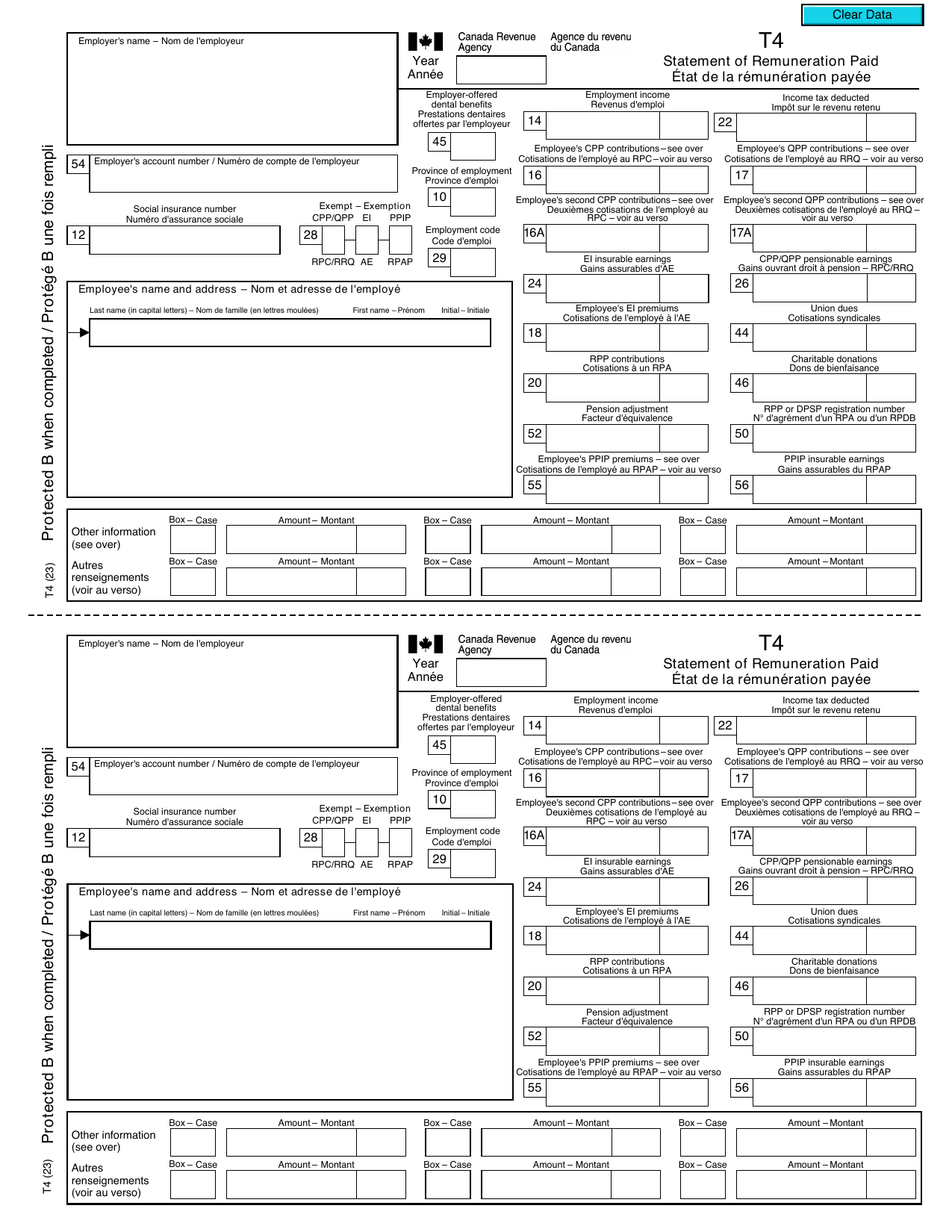
At the end of each calendar year, employers must issue T4 slips to all employees and file the T4 Summary with the CRA by the last day of February. The T4 records total employment income, CPP contributions, EI premiums, and income tax deducted. Errors on T4s can trigger employee reassessments and employer penalties, so accuracy throughout the year — not just at year-end — is essential.
Businesses working with a Calgary-area bookkeeper or payroll specialist, such as the team at Swift Accounting Ltd., often avoid year-end scrambles by reconciling payroll accounts monthly rather than waiting until February.
The CRA charges a penalty of 3% to 10% of the outstanding amount depending on how late the remittance is, plus daily compound interest at the prescribed rate. Late remittances also appear on your compliance record, which can affect your remitter category in future years. Repeated failures can result in director liability assessments, meaning the CRA can collect from a company director personally.
Yes. CPP and EI apply to virtually all employment income in Canada regardless of hours worked, provided the employee is under 70 (for CPP) and in insurable employment (for EI). There are narrow exceptions — for example, CPP does not apply to employees over 70, and family members in certain employment arrangements may be exempt from EI — but the default rule is that deductions apply from the first dollar of insurable or pensionable earnings.
RRSP contributions themselves are not a payroll deduction withheld by the employer unless the business operates a group RRSP with payroll deduction at source. However, employees can request additional income tax reductions through a letter of authority (T1213) approved by the CRA, which effectively lets the employer reduce tax withholding to account for anticipated RRSP contributions. The 2025 RRSP deduction limit is $32,490, and unused room carries forward indefinitely.
No. TFSA contributions are made with after-tax dollars, so they have no effect on payroll deductions or income tax withholding. The 2025 annual TFSA contribution limit is $7,000, and while TFSAs are an excellent savings vehicle, they provide no upfront tax reduction the way RRSP contributions do. Employers have no role in administering employee TFSAs.
You must begin withholding and remitting source deductions starting with the very first paycheque you issue — there is no grace period. Collect the employee's federal and provincial TD1 forms on or before their first day of work, make sure your payroll account with the CRA (a Business Number with an RP program account) is set up if you have not already registered one, and include the new hire's deductions in your very next remittance. Waiting until an employee has been on the job for a few weeks before starting deductions is a common and costly mistake.
You are not required to use PDOC specifically. Any method that produces the correct withholding amount is acceptable — dedicated payroll software, manual calculation using the T4032 tables, or PDOC itself. What matters to the CRA is that the amounts withheld and remitted are accurate and on time. Because PDOC is free and updated immediately whenever rates change, it remains a reliable way to run payroll manually or to spot-check what your payroll software is producing.
Canadian payroll compliance involves more moving parts than most business owners anticipate — dual CPP tiers, accelerated remittance schedules, provincial TD1 variations, and year-end T4 reconciliation all demand consistent attention. A single miscalculation compounded over a year of pay periods can mean thousands of dollars in penalties and back-remittances. Whether you are setting up payroll for the first time or untangling errors from a previous system, working with experienced professionals makes a measurable difference. The team at Swift Accounting Ltd. helps Calgary-area businesses and remote clients across Canada stay fully compliant, every pay period. Contact us today to discuss your payroll setup or to schedule a payroll health check for your business.